

Season and wildlife
The Great Migration: choose the place, season and time to wait
The Great Migration is a moving ecological system, not a scheduled event. Rain, fresh grazing and local conditions influence where herds gather. Choose the experience you want, then a suitable region and enough time there; no date can guarantee a river crossing.
Wildebeest descending a rocky river bank in the Maasai Mara.Photo: © Nina R from Africa · CC BY 2.0 · Image credits

Read the annual pattern as a planning guide
Early in the year, the southern Serengeti and Ndutu short-grass plains are associated with the calving period. TANAPA highlights January and February for calving, while the Ngorongoro authority describes late February and early March as useful migration time on its plains. These are overlapping seasonal tendencies, not a daily herd forecast.
As grazing conditions change, herds move through other parts of the ecosystem. Western and northern Serengeti become relevant at different stages, with the northern Serengeti and Maasai Mara often considered for later dry-season river-country trips. Animals can split into many groups, pause, move back or cross the same river more than once.
Calving, herds and crossings ask for different trips
For calving, the priority is time on the southern plains and an appropriately located camp. The interest is wider than births: grazing groups, young animals, predators, changing light and the scale of the landscape all matter. A trip advertised for the season should still explain its actual base and access.
For a river crossing, the practical ingredient is time near a relevant crossing area. Waiting can occupy much of a day and may produce no crossing. Families should consider whether long stationary periods suit everyone; a mixed itinerary can retain drives for resident wildlife.
- A herd-focused trip need not depend on a river crossing.
- A crossing-focused trip needs several opportunities, not a timed appointment at the river.
- A photography trip should discuss vehicle space, patience and location before adding more parks.
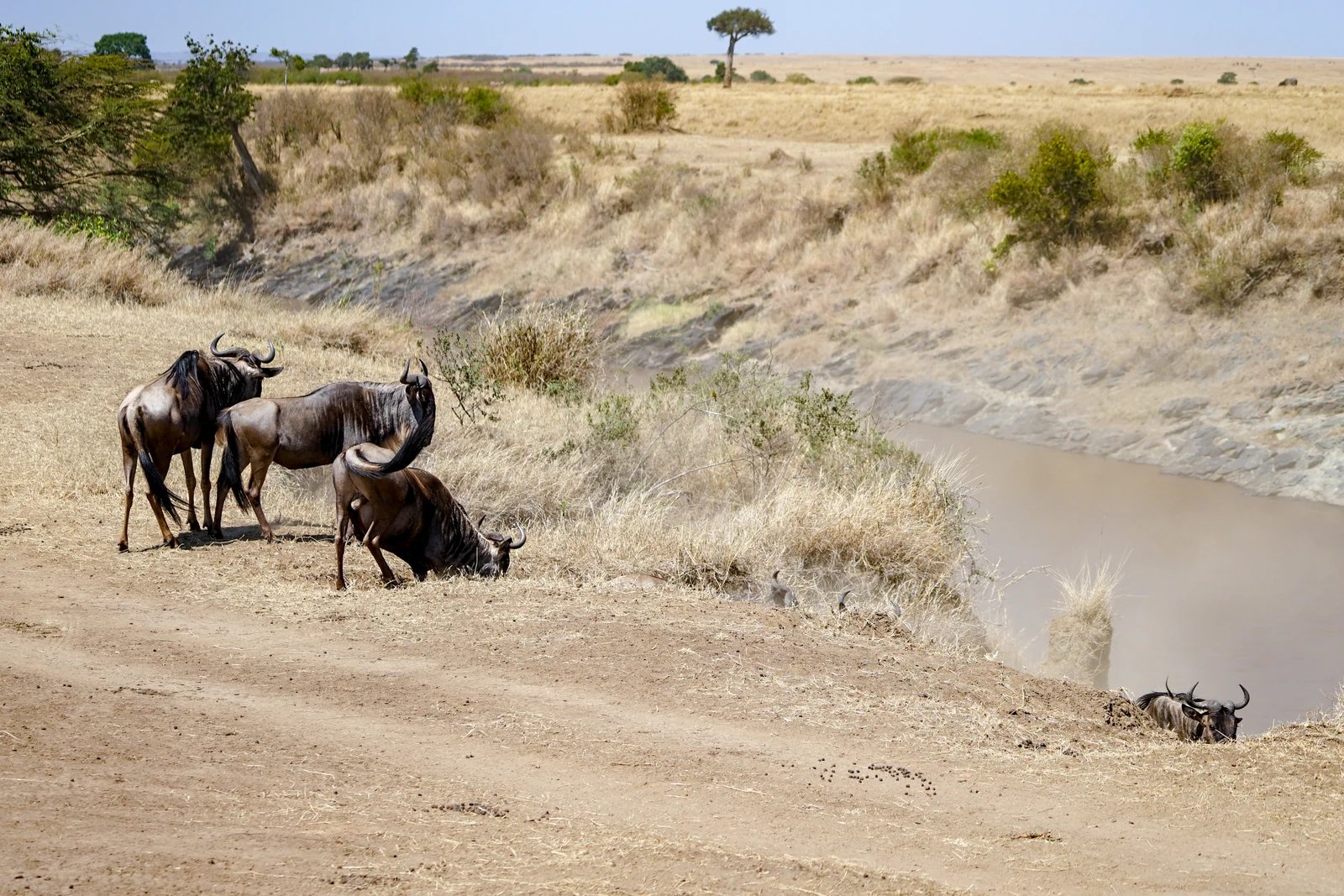
Wildebeest beside a river in the Maasai Mara.Photo: © Nina R from Africa · CC BY 2.0 · Image credits

Maasai Mara or Serengeti: match the region to the month
The two protected areas belong to a connected ecosystem but sit in different countries. The Serengeti offers access to a wider range of seasonal locations; the Mara can be an efficient focus from Kenya when its region suits the trip. The best choice depends on travel dates, target experience and the rest of your route.
A map showing adjacent parks does not establish a simple tourist border transfer between them. A combined itinerary must spell out its lawful crossing or flight plan, immigration checks and vehicle arrangements. It should justify that travel time with enough nights on both sides.
Ask where the camp is during your dates
The words “migration camp” do not establish proximity to current herds. Ask for the camp’s operating location during the booked period, the expected drive to the relevant sector and the alternative plan if herds shift. A seasonal location is useful context; it is not a promise that animals will stay nearby.
Give more weight to consecutive nights in the right region than to a long list of distant camps. A second night avoids another checkout and transfer, and provides another chance to work with weather and animal movement.
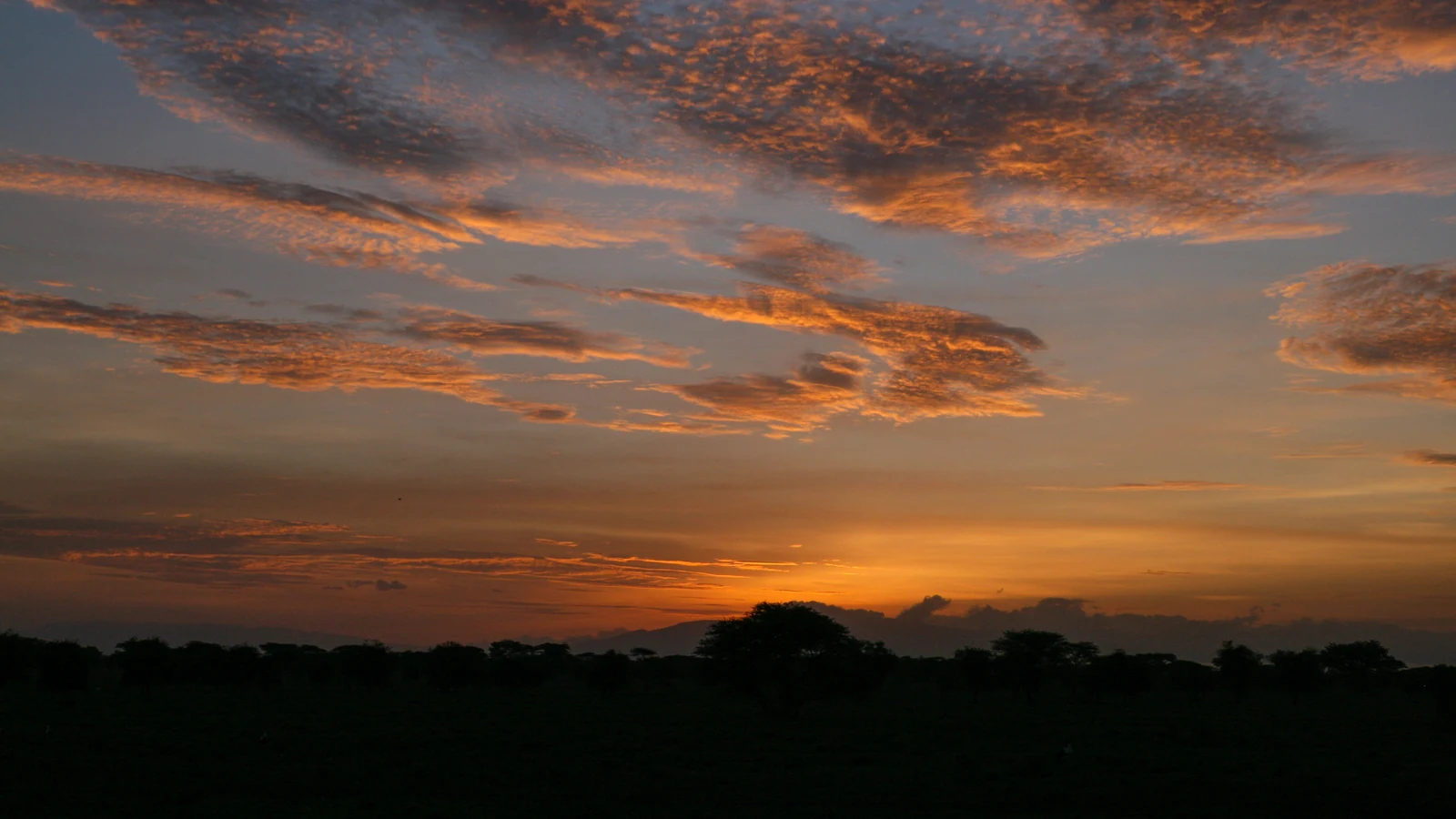
Orange sunrise over the Ndutu area of the Serengeti ecosystem.Photo: © Christoph Strässler from Oberdorf BL, Schweiz · CC BY-SA 2.0 · Image credits

At the river, animal movement comes first
TANAPA’s revised June 2024 guidance requires vehicles to use designated areas and remain stationary during crossings. Follow current signs and ranger directions; do not urge a driver to race to a bank, block an exit route or move closer to force a photograph.
Use a longer lens and prepare settings while waiting. Keep the camera secure inside the vehicle, reduce unnecessary noise and let the guide decide when the group should move on. A quiet, incomplete view is preferable to disrupting the event you came to observe.
Questions travellers ask
- Which month guarantees a Mara River crossing?
- None. Broad seasonal windows guide where to travel, but crossings depend on conditions and animal decisions. Several nights provide opportunities without guaranteeing the event.
- Is the migration absent outside July to October?
- No. The herds continue to move through the wider Serengeti–Mara ecosystem. Different locations and experiences, including southern calving, are relevant at other times.
- Should I choose a river-crossing trip for young children?
- Consider their tolerance for heat, waiting and long vehicle days. Discuss shorter drives and mixed wildlife activities, or choose a general safari where a crossing is a possible bonus.
Sources checked
Last checked: .
Official sources support factual guidance; route and pacing suggestions are planning advice from Family's catalogue. Entry rules, park conditions and activity availability can change. Check the linked authority again before departure.