

Tanzania · Migration
10 Days Tanzania Migration Circuit — Serengeti, Mara River Crossings & Ngorongoro
Overview
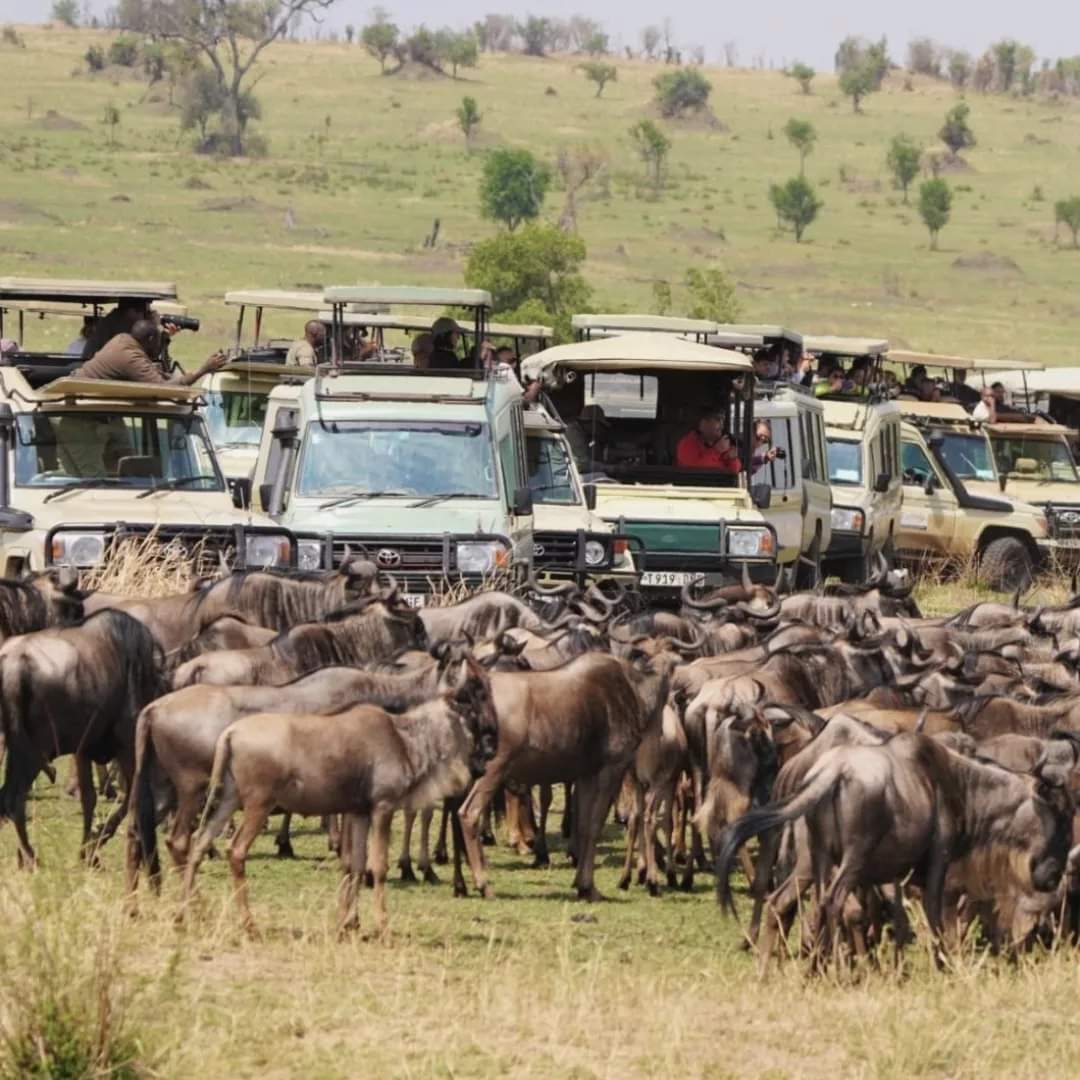
This 10-day Tanzania migration circuit is the definitive Serengeti safari for travelers who want to witness the world's most extraordinary wildlife spectacle: 1.5 million wildebeest, 250,000 zebra and 350,000 gazelle moving in an endless circle across the Serengeti-Mara ecosystem, pursued by the densest predator population on Earth. The 10-day length is deliberate — it gives you time to track the herds across multiple zones, increases your chances of witnessing a Mara River crossing (the migration's most dramatic moment), and includes Tarangire and Ngorongoro for the full Tanzania experience.
Your itinerary is built around the migration's seasonal calendar. From July through October, you'll camp in Northern Serengeti within sight of the Mara River where crocodiles wait for crossing herds — this is the chapter every wildlife documentary builds around. From December through March, the itinerary shifts south to Ndutu in southern Serengeti where 8,000 wildebeest calves are born per day and predator action peaks. Either timing works; we book your dates to whichever migration phase you're after.
Beyond the migration itself, this circuit covers Tanzania's three crown jewels: Tarangire's elephant kingdom and ancient baobabs, Lake Manyara's tree-climbing lions, and the Ngorongoro Crater — a 19km wide volcanic caldera that holds the densest wildlife concentration on Earth, including the rare black rhino. Mid-range to comfort-class lodges and tented camps throughout, with optional luxury upgrades for honeymooners or photographers wanting single-row safari vehicles. KPSGA and Tanzania-licensed driver-guides who track migration radio reports daily and reposition your itinerary in real-time when crossings are imminent.
Highlights
- ✦Witness the great wildebeest migration in Serengeti National Park
- ✦Chance of Mara River crossings (July–October) — the migration's peak drama
- ✦Ndutu calving season alternative (December–March) — 8,000 calves born daily
- ✦Ngorongoro Crater game drive — densest wildlife concentration on Earth
- ✦Tarangire's elephant herds and ancient baobab trees
- ✦Lake Manyara's famous tree-climbing lions
- ✦5 nights in Serengeti — the time needed for migration tracking
- ✦Optional sunrise hot-air balloon safari over Serengeti plains
Day-by-day itinerary
- 1
Arrival in Arusha
Kilimanjaro International Airport → Arusha
Your Tanzania-licensed driver-guide meets you at Kilimanjaro International Airport (JRO) with a sign bearing your name and transfers you the 50 minutes south-west to Arusha — the safari capital of northern Tanzania, sitting in the green coffee-growing foothills of Mount Meru. Check into your boutique hotel in time for a leisurely lunch on the verandah and an afternoon by the pool to recover from the long flight in. At 5pm your driver-guide returns for a one-hour safari briefing: he'll walk you through the day-by-day plan, hand over your park permits, fit you for binoculars, demonstrate the pop-top vehicle, and answer questions about migration timing, photography setups, dietary needs and tipping etiquette. Dinner at the hotel — Tanzanian cuisine with continental options — and an early night ahead of tomorrow's bush departure.
Meals: D · Stay: Arusha Coffee Lodge / Mount Meru Hotel / Onsea House
- 2
Into elephant country
Arusha → Tarangire National Park
Breakfast at 7am, then depart Arusha at 8am for the 2.5-hour drive south-west to Tarangire National Park — a 2,850-square-kilometer wilderness famed for the highest density of elephants in northern Tanzania (often herds 200-strong) and the most ancient baobab trees on the continent, some over 1,000 years old. Stop in the Maasai market town of Mto Wa Mbu for a cultural lunch, then enter the park around 1pm. The afternoon game drive runs along the Tarangire River, the park's lifeline in the dry season when elephants, buffalo, lions and even leopards congregate to drink. Look for tree-climbing pythons, fringe-eared oryx and the rare gerenuk antelope. Sundowner photographs at the Silale Swamp lookout point as the sky turns molten over baobab silhouettes. Dinner and overnight at your Tarangire lodge.
Meals: B, L, D · Stay: Tarangire Sopa Lodge / Maramboi Tented Camp / Tarangire Safari Lodge
- 3
Tree-climbing lions of Lake Manyara
Tarangire → Lake Manyara → Karatu
After a relaxed breakfast and one final morning Tarangire game drive, depart at 10am for the 1.5-hour drive north to Lake Manyara National Park — a small but ecologically extraordinary park squeezed between the Rift Valley escarpment and the alkaline lake. Lunch at the park gate, then enter for a half-day game drive through ground-water forest where colonies of olive baboons and blue monkeys patrol the canopy and Lake Manyara's famous tree-climbing lions drape themselves across the high branches of acacia trees — a behavior found in only two locations on Earth. The lake itself shimmers pink with thousands of lesser flamingos in season, with great white pelicans, yellow-billed storks and African fish eagles around the shallows. By late afternoon transfer 30 minutes up the escarpment to Karatu, the cool agricultural town that serves as your gateway to Ngorongoro and Serengeti. Overnight at a coffee-plantation lodge.
Meals: B, L, D · Stay: Tloma Lodge / Plantation Lodge / Country Lodge Karatu
- 4
The endless plains
Karatu → Central Serengeti (Seronera)
An early 6am breakfast precedes the long but spectacular 5-hour drive west through the Ngorongoro Conservation Area, climbing past the crater rim viewpoint (a teaser for Day 9), descending onto the Serengeti plains via Naabi Hill Gate where you'll picnic-lunch with the entire 14,750 sq km of Serengeti National Park rolling out before you. Translated from Maasai, 'serengeti' means 'endless plains' — a name you'll understand the moment you crest the gate. By 2pm you're in the Seronera Valley, the central Serengeti's wildlife heartland, where leopards drape themselves on sausage trees, prides of 20+ lions stalk the kopjes, and cheetahs sprint after Thomson's gazelles on the open plains. Late-afternoon game drive en route to your Central Serengeti camp. Dinner under canvas, lions calling in the dark, your first true Serengeti night.
Meals: B, L, D · Stay: Serengeti Sopa Lodge / Kati Kati Tented Camp / Mbuzi Mawe Serena
- 5
Full day in Central Serengeti
Central Serengeti — Seronera Valley & Moru Kopjes
An optional sunrise hot-air balloon safari (US$590pp, pre-bookable) lifts off at 5am for a one-hour drift over the Serengeti plains as the sun comes up — concluded by a champagne bush breakfast on the savanna. Non-balloon guests start with a 6am game drive and breakfast en route. The full day explores Central Serengeti's most rewarding zones: the Moru Kopjes (rocky outcrops where lions sun themselves and leopards den in the crevices), the Maasai rock paintings (1,500-year-old ochre images on a hidden cliff), the Hippo Pool (250+ hippos in a single bend of the Mara River tributary), and Retina Hill — the best leopard-sighting hill in all of Africa. Picnic lunch in the bush. Return to camp at sunset for sundowners, dinner and a chance to compare today's photographs around the campfire. Overnight Central Serengeti.
Meals: B, L, D · Stay: Serengeti Sopa Lodge / Kati Kati Tented Camp / Mbuzi Mawe Serena
- 6
Following the migration north
Central Serengeti → Northern Serengeti (Mara River area)
After breakfast you check out and begin the 5-hour game-drive transfer north through the migration's classic corridor — Lobo Valley, Bologonja Springs, the Grumeti woodlands. From July through October the herds are everywhere on this drive: a thousand wildebeest stretching to the horizon, dust columns rising from approaching herds, predators tracking the edges. Picnic lunch on a kopje. By mid-afternoon you arrive at your Northern Serengeti tented camp on the southern bank of the Mara River — the very camps you've seen in National Geographic crossing footage. A short afternoon orientation game drive lets your guide check the latest crossing intelligence: which crossing points are active, where the herds are massing, what time tomorrow they're expected at the river's edge. Sundowners at camp, the Mara River below you, dinner under acacia trees, and the tense excitement of knowing tomorrow could be the day.
Meals: B, L, D · Stay: Mara River Tented Camp / Sayari Camp / Lemala Mara
- 7
The Mara River crossings
Northern Serengeti — Mara River, Lobo Valley
The day every traveler comes for. You leave camp at 6am with a packed breakfast and packed lunch — the day is built around being in position when the herds arrive, which can happen at 8am or 4pm with little warning. Your driver-guide is in radio contact with seven other vehicles spread across the river's main crossing points (Crossing 1 through Crossing 9), and the moment a herd starts to mass on the bank, you reposition. A Mara crossing is the most extraordinary 20 minutes in the natural world: 30,000 wildebeest plunging down a 4-meter bank into croc-infested water, calves separated from mothers, the line stretching from horizon to horizon, the sound deafening. If no crossing happens (some days they wait), the consolation is exceptional: lion prides on every kopje, leopards in the riverine forest, the Bologonja Springs herd of 60+ giraffe. Return to camp at sunset, exhausted and full of stories.
Meals: B, L, D · Stay: Mara River Tented Camp / Sayari Camp / Lemala Mara
- 8
Back to the highlands
Northern Serengeti → Ngorongoro Conservation Area
A long but never dull driving day — 6 hours of game-driving south through the Serengeti, retracing the migration's path in reverse. Breakfast at the camp, then depart at 7:30am with a packed lunch. Stop at Naabi Hill Gate for picnic lunch with eland and zebra grazing the slopes around you. Continue east through the Ngorongoro Conservation Area's grasslands, climbing slowly to 2,300m elevation where the air becomes thin and cool and Maasai herders walk their cattle along the road. Arrive at your crater-rim lodge by 4pm, with the Ngorongoro Crater spread below you like a green amphitheater — the entire 19km-wide caldera visible from the lodge verandah. A hot shower, a strong drink, dinner with crater views, and an early night ahead of tomorrow's pre-dawn descent.
Meals: B, L, D · Stay: Ngorongoro Sopa Lodge / Lemala Ngorongoro / Rhino Lodge
- 9
Inside the Ngorongoro Crater
Ngorongoro Crater floor
A 5:30am breakfast and 6am descent down the steep crater wall — the gate opens at sunrise and the early vehicles get the rhino sightings before the day-trip crowds arrive. The Ngorongoro Crater floor is 260 sq km of grassland, marsh, soda lake and acacia woodland, supporting roughly 25,000 large mammals in a self-contained ecosystem. In a single morning you can realistically see all of the Big Five: the 60-strong elephant herd at Lerai Forest, the densest lion population per square kilometer on Earth, buffalo in their hundreds, leopard on the crater walls, and most magically, the rare black rhino — only 30 individuals remaining in the crater, but spotted on roughly 70% of our visits. Picnic lunch beside Ngoitokitok hippo pool. Ascend the crater wall by 4pm and return to your lodge for a final dinner.
Meals: B, L, D · Stay: Ngorongoro Sopa Lodge / Lemala Ngorongoro / Rhino Lodge
- 10
Departure
Ngorongoro → Arusha → Kilimanjaro International Airport
A relaxed 8am breakfast precedes the 4-hour drive back to Arusha. An optional 90-minute stop at Olduvai Gorge — the 'Cradle of Humankind' where the Leakey family discovered 1.8-million-year-old hominid remains — adds historical weight to your trip; the small museum is excellent. Lunch in Arusha at a coffee-plantation restaurant, then your driver-guide transfers you the final hour to Kilimanjaro International Airport for evening international departures (most flights to Europe, the Middle East and North America leave between 8pm and midnight). Day rooms can be pre-booked at the Arusha hotel if you have a long wait. Asante sana, kwaheri — thank you very much, goodbye. End of your Tanzania migration safari.
Meals: B, L · Stay: N/A (departure)
Included
- ✓ Airport pickup and drop-off at Kilimanjaro International (JRO)
- ✓ 9 nights full-board accommodation (mid-range lodges and tented camps as listed)
- ✓ Private 4x4 safari Land Cruiser with pop-top roof
- ✓ Tanzania-licensed (TPSGA) professional driver-guide
- ✓ All Tanzania National Parks (TANAPA) entry fees and Ngorongoro Conservation Area fees
- ✓ Concession and crater-service fees
- ✓ Bottled drinking water during game drives
- ✓ Game drives as per itinerary
- ✓ All government taxes and KATO/TATO levies
- ✓ AMREF Flying Doctors emergency evacuation cover
Not included
- ✕ International airfare to/from Kilimanjaro International (JRO)
- ✕ Tanzania entry visa (apply online or on arrival)
- ✕ Travel insurance (mandatory)
- ✕ Optional sunrise balloon safari (US$590pp)
- ✕ Optional Olduvai Gorge entry fee (US$35pp)
- ✕ Beverages, soft drinks, alcoholic drinks
- ✕ Tips and gratuities to driver-guide and camp staff (suggested US$15–25/pp/day)
- ✕ Personal expenses, laundry, telephone calls, souvenirs
What to bring
- • Lightweight neutral-color clothing (khaki, olive, beige)
- • Warm fleece for cool early morning game drives
- • Sun hat and sunglasses with UV protection
- • High-SPF sunscreen and lip balm
- • Insect repellent (DEET)
- • Comfortable walking shoes and sandals
- • Swimsuit for lodge pools
- • Binoculars (8x42 ideal for safari)
- • Camera with telephoto lens (200mm or longer)
- • Spare batteries, memory cards, power bank
- • Refillable water bottle
- • Small daypack
- • Anti-malarial prophylaxis (consult your doctor)
- • Copies of passport and travel insurance
- • Long telephoto lens (300mm+) for crossing photography
- • Beanbag or mini-tripod for vehicle window mount
- • Dust covers and lens cloths (Serengeti dust is relentless)
- • Headlamp for tented camps
Frequently asked questions
You may also like
Related tanzania migration safaris
 6 days · Tanzania
From $3,490 pp
6 Days Serengeti Great Migration Safari — River Crossings
Time your Tanzania safari to the world's greatest mammal migration — 1.5 million wildebeest crossing crocodile-filled rivers in the northern Serengeti, July through October.
View itinerary → 8 days · Tanzania
From $5,290 pp
8 Days Serengeti Migration Photography Safari
A premium photography-led migration safari with single-row vehicles, beanbag mounts, dawn departures, late returns and a professional photography guide.
View itinerary → 5 days · Tanzania
From $2,890 pp
5 Days Ndutu Calving Season Migration Safari (December–March)
Southern Serengeti / Ndutu when 8,000 wildebeest calves are born per day and predator action is at its peak — the migration's other great chapter.
View itinerary →