Destination guide
Everything you need to know about Mount Kenya.
Why climb Mount Kenya
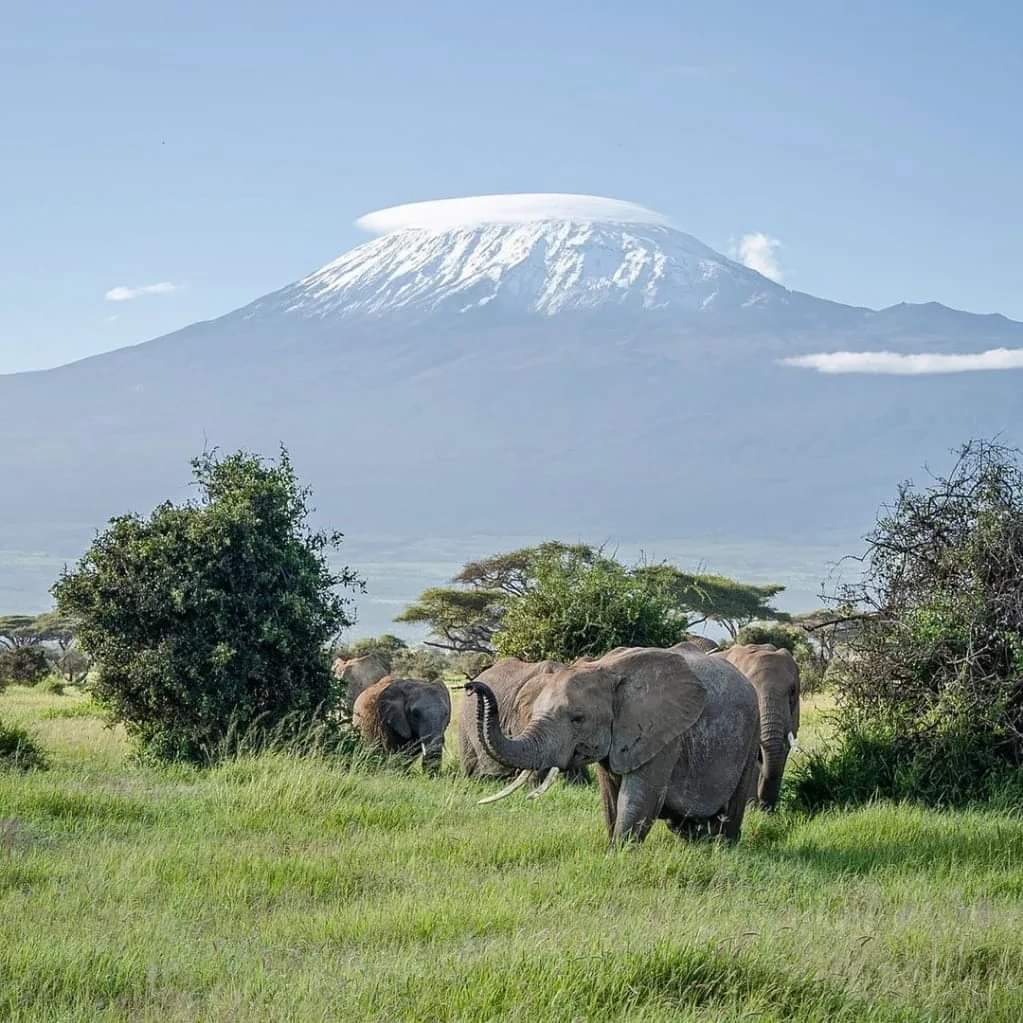
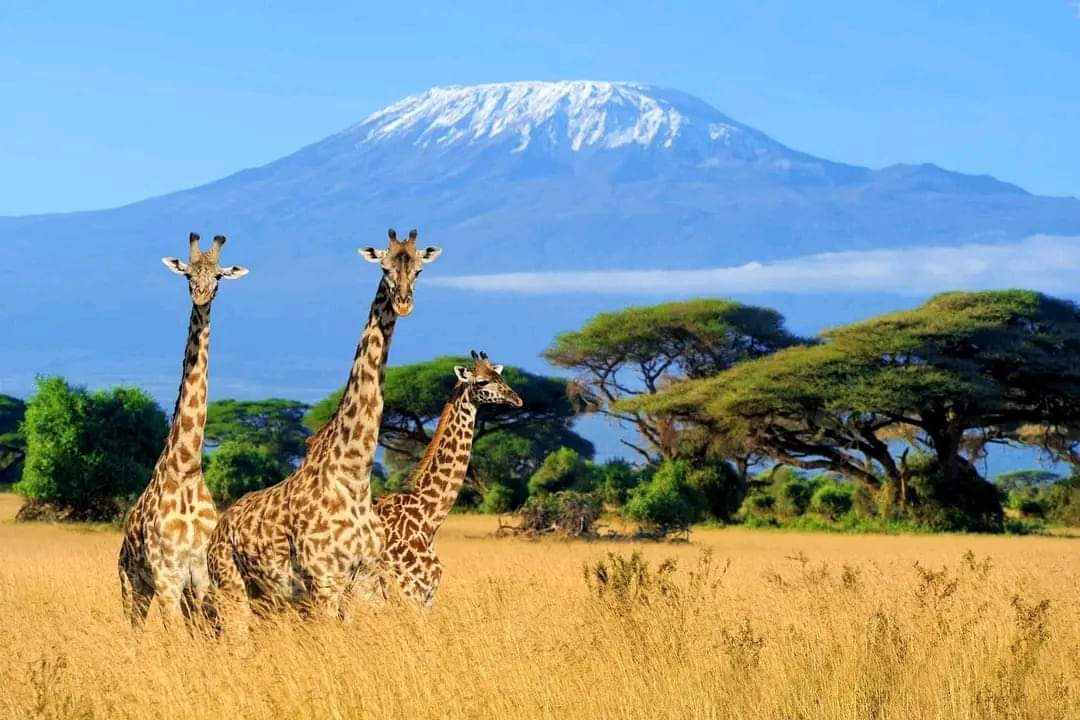
Mount Kenya is Africa's second-highest mountain at 5,199 m and the original Kenyan icon — the country is named for it. It is a younger mountain than Kilimanjaro (around 3 million years versus Kilimanjaro's 3 million plus), but its three principal peaks — Batian (5,199 m), Nelion (5,188 m) and Lenana (4,985 m) — are the eroded core of an extinct volcano that once stood roughly 7,000 m tall. Batian and Nelion are technical rock climbs requiring rope, harness and Grade 5 alpine experience. Lenana, the third peak, is a 'walker's summit' — non-technical, achievable in 4–5 days by anyone in good general fitness, and the standard goal of every Mount Kenya trekker. The mountain was inscribed as a UNESCO World Heritage Site in 1997 and the surrounding Mount Kenya National Park (715 km²) protects a unique ecosystem of bamboo forest, Hagenia woodland, alpine moorland and equatorial glaciers.
The three trekking routes
Three established routes lead to Point Lenana. The Sirimon Route (north-west) is the driest, has the best acclimatisation profile and is the most popular ascent. The Chogoria Route (east) is universally agreed to be the most scenic, traversing the dramatic Gorges Valley and Lake Michaelson under towering cliffs. The Naro Moru Route (south-west) is the shortest and steepest — historically the standard route, now mostly used for fast 3-day descents. The classic 5-day traverse is to ascend via Sirimon and descend via Chogoria, combining the easiest ascent with the most beautiful descent. Most operators offer this as a 5- or 6-day package including porters, guides, hut accommodation, full board and park fees, from $750 to $1,400 per person depending on group size and standard.
Day-by-day: the classic Sirimon-Chogoria traverse
Day 1: Drive from Nairobi to Sirimon Gate (2,650 m), trek 3 hours to Old Moses Camp (3,300 m). Day 2: Trek 6–7 hours to Shipton's Camp (4,200 m) through moorland with views of Batian. Day 3: Acclimatisation day at Shipton's — short hike to Point Pigott or rest. Day 4: Summit day. Wake at 0230, climb 4–5 hours to Point Lenana for sunrise (4,985 m), descend 2 hours to Shipton's, breakfast, then cross the Hausberg Col into the Gorges Valley and descend to Mintos Hut (4,200 m). Day 5: Trek through the Gorges Valley past Lake Michaelson (one of the most beautiful campsites in Africa) and descend through the bamboo forest to Chogoria Gate (2,950 m). Drive back to Nairobi or onward to Samburu/Ol Pejeta. The traverse is 70+ km of trekking with roughly 3,500 m of total ascent.
Best time to climb
Mount Kenya has two reliable climbing seasons. January and February are the driest months, with clear views, cold nights and the best photography. August and September are the second dry season and slightly wetter than Jan–Feb but still good. April, May and November are the rainy seasons and many trekkers avoid these months because bamboo forest and moorland become muddy and views are limited. The summit can be climbed year-round — there is no closure — but rain on Lenana's scree slopes is miserable. Daytime temperatures at altitude range from 0 to 15 °C; nighttime temperatures at Shipton's drop to -5 to -10 °C. Bring serious cold-weather gear.
Fitness and acclimatisation
Mount Kenya is non-technical for Lenana — no ropes, no crampons, no glacier crossings on the standard routes. But altitude is real: 5,000 m is only 800 m below Kilimanjaro's summit and the same acclimatisation rules apply. A 4-day climb (the typical budget package) has a very high failure rate due to altitude sickness. A 5-day Sirimon ascent is the minimum for reasonable summit success, and a 6-day version with an extra acclimatisation day at Shipton's pushes summit rates above 90%. Trekkers should be in good aerobic condition — capable of comfortable 6-hour mountain walks with a daypack for 4 consecutive days. Diamox prophylaxis is standard; consult your doctor.
Wildlife in Mount Kenya National Park
The park's lower slopes (1,800–3,000 m) are dense bamboo and Hagenia forest holding mountain elephant, buffalo, bushbuck, the giant forest hog and (very rarely) bongo and black leopard. The mid-altitude moorland (3,000–4,000 m) is the home of the unique giant lobelia and giant groundsel plants — alpine flora that grows nowhere outside East African high mountains. The high altitudes (4,000–5,000 m) are too cold for large mammals, but rock hyrax are common around the camps and you'll see lammergeiers, augur buzzards and the verreaux's eagle riding the thermals. Lower slopes around Mount Kenya Wildlife Conservancy and Solio host the rare bongo in semi-captive breeding programmes.
Where to stay before and after the climb
The classic pre-climb base is the Mount Kenya Safari Club at Nanyuki ($300–500 per person), the historic William Holden colonial-era resort with its own animal orphanage, equator marker and bongo conservancy. The Naro Moru River Lodge ($120–180) is the budget alternative on the other side of the mountain. Serena Mountain Lodge — a tree-top game-viewing lodge in the bamboo zone of the lower park — is unique to this region. After the climb, most trekkers head to Ol Pejeta Conservancy (1 hour away) or Samburu (2 hours away) for a wildlife reward. On the mountain itself, accommodation is in basic huts or tents — Old Moses, Shipton's, Mintos, MacKinder's. Camping is permitted at all huts; tents and porters are arranged through your operator.
How to get to Mount Kenya
From Nairobi the gateway towns are Naro Moru (180 km / 3 hours via Karatina) on the south-west side, Nanyuki (200 km / 3.5 hours via Nyeri) on the north-west side, and Chogoria (230 km / 4 hours via Embu) on the east side. Most operators meet trekkers in Nairobi at 0700 and drive to whichever gate the route starts at. Nanyuki has a small domestic airport (NYK) with daily Safarilink flights from Wilson, useful for combining Mt Kenya with northern Kenya safaris. Mount Kenya International Airport at Isiolo, 90 minutes north, is a larger but less-used option.
Park fees, permits and practical info
Mount Kenya National Park is KWS-managed. Climbing fees are $52 per non-resident adult per day. Hut and camping fees are $25 per person per night. Most trekkers' operators bundle all park fees, hut accommodation, porters, guides, food and gate transport into a single trek price. Independent climbing is possible but not recommended — porters and a registered guide are essentially mandatory at altitude. Pack: 4-season sleeping bag, down jacket, hardshell jacket and trousers, mid-layer fleece, warm hat, gloves, headtorch, sun protection, water-purification tablets. Hire equipment is available at Naro Moru and Nanyuki for travellers without their own gear.